
Sustainable Landscaping and Biodiversity
A park should be designed to promote ecological sustainability and biodiversity. This includes planting native species, fostering wildlife habitats, and using environmentally friendly landscaping techniques — while also taking into account the impact of certain plants on people with allergies or sensitivities.
-
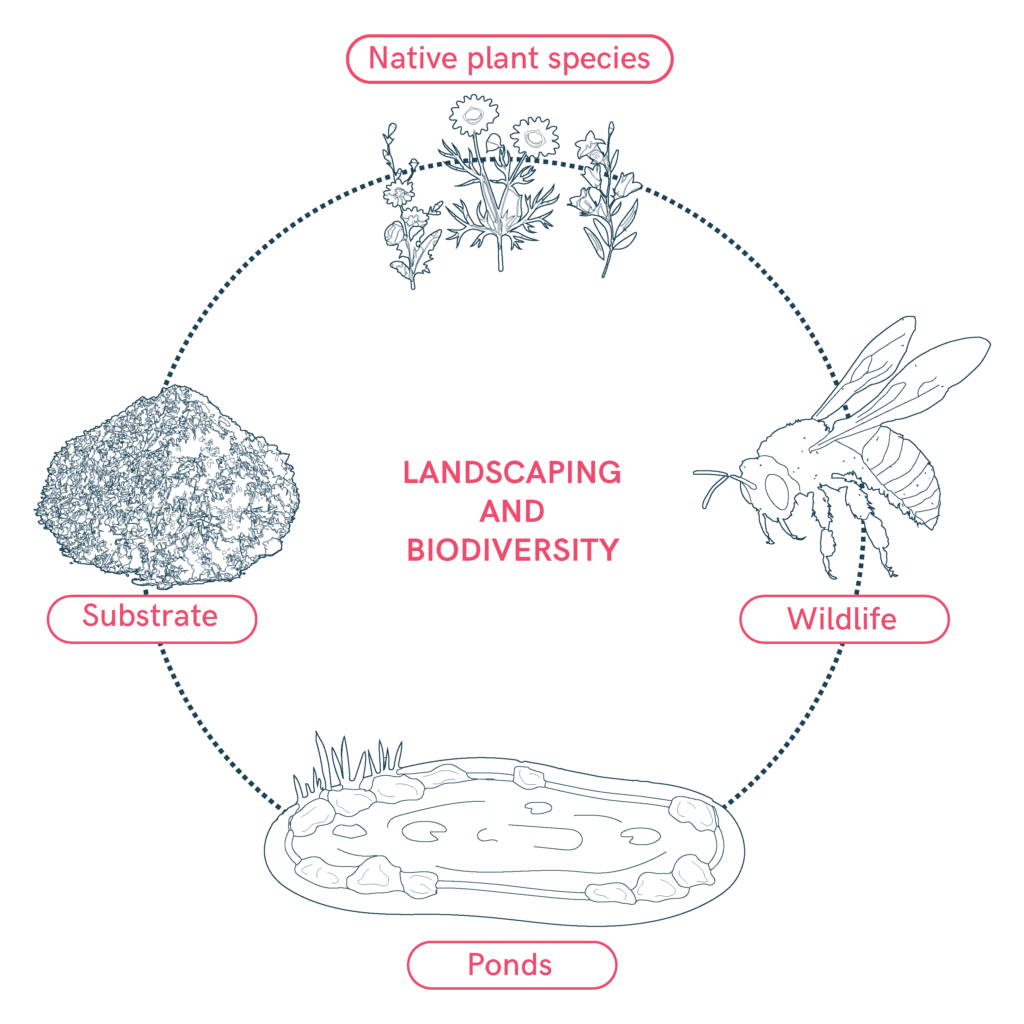
Use native plant species that thrive in the local environment and help attract local wildlife.
-
Incorporate elements like ponds, wetlands, and meadows to support diverse ecosystems.
-
Apply sustainable landscaping techniques to conserve water, support soil health, and encourage natural regeneration.
-
Choose a wide variety of native species with different flowering times, fruiting periods, and forms to increase ecological richness and avoid massive pollination at once.
-
Avoid highly allergenic species and consider hypoallergenic alternatives when possible.
-
Correctly select and maintain the planting substrate to ensure healthy plant growth.
-
Locate bushy or dense vegetation in areas that won’t interfere with visibility, airflow, or accessibility.