
Renaturalization and Habitat Creation
For long-term ecological benefits, parks should promote the renaturalization of landscapes and the creation of habitats where wildlife can thrive — while also considering the impact of vegetation on people with allergies and sensitivities.
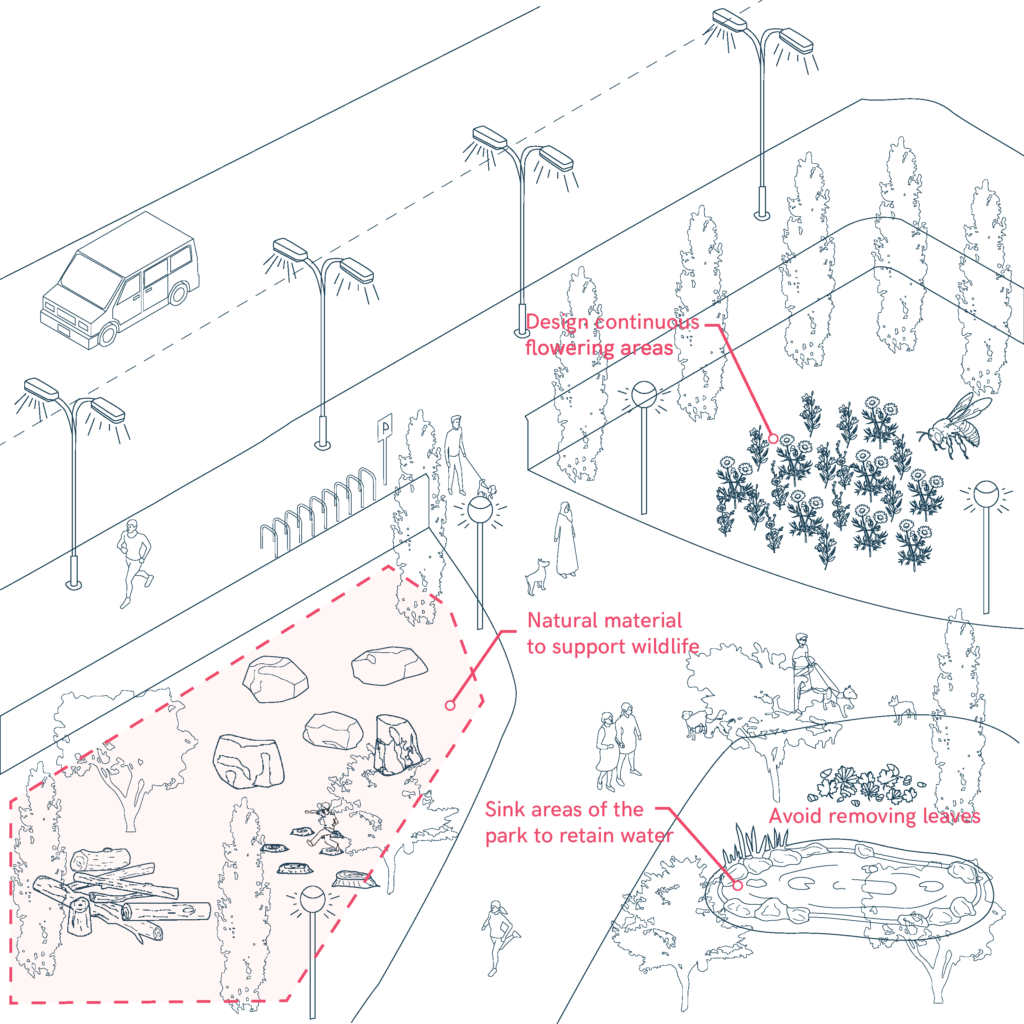
- Sink areas of the park to retain rainwater naturally and support hydrophilic native plant species.
- Create microhabitats using logs, rocks, and other natural materials to provide shelter for insects, birds, and small mammals.
- Avoid excessive removal of fallen leaves, as they help nourish the soil and protect it from erosion — but manage their accumulation in high-traffic or allergy-sensitive areas.
- Design flowering zones that support pollinators like bees and butterflies, using plant species with staggered blooming periods to reduce heavy pollen exposure at any one time.
- Select wildlife-friendly plants that are also low in allergenic potential, balancing ecological function with user health.
- Use buffer zones or distance planting strategies to separate high-pollen species from pathways and rest areas.
- Encourage a mosaic of vegetation types and blooming cycles to support biodiversity while minimizing allergy peaks.