
Below, we list the 13 categories of the Inclusion Perspectives through a glossary that defines,
contextualises and explains why these particular categories have been selected, what content
and nuances each of them entails, and why they are linked to future needs and challenges in
terms of accessibility and inclusion within the built environment.
Carers
Individuals who provide unpaid or paid support and assistance to persons who require help due to age, disability, illness or dependency. Carers may be family members, informal supporters or professional caregivers. Inclusive frameworks recognise carers as stakeholders whose needs, time constraints and well-being must be considered in the design of services and public policies.
Children
Persons under the age of legal adulthood who are in ongoing stages of physical, cognitive, emotional and social development. Inclusive approaches require environments, services and communication systems to be safe, developmentally appropriate and supportive of participation, autonomy and well-being, in accordance with child protection and rights-based standards.

Cognitive Abilities
Cognitive abilities refer to the mental processes that enable individuals to perceive, process, understand, retain and apply information, including attention, memory, executive functioning, language comprehension, decision-making and problem-solving. From an inclusive perspective, this category encompasses neurodivergent conditions – among others – dyslexia, ADHD, dyscalculia, autism spectrum conditions and sensory processing differences (including hyperacusis), as well as intellectual disabilities, neurological disabilities and psychosocial disabilities (among others: schizophrenia, personality disorders and bipolar disorder, severe depression, mood disorders). Cognitive ability also recognises the impact of emotional regulation factors such as stress and anxiety on cognitive performance and interaction with the environment. Elements of designs in the built environment may have positive or negative impact on cognitive abilities. Assistive technology is a key to leveling the playing field for individuals with cognitive disabilities.

Decolonial Perspective
A decolonial perspective is a critical analytical approach that examines and challenges dominant epistemologies, power structures and institutional norms rooted in colonial histories and Eurocentric worldviews. Within inclusive practice, it seeks to recognise and legitimise diverse cultural knowledge systems, languages, identities and lived experiences, particularly in societies shaped by migration and multiculturalism. In contemporary Western contexts characterised by large migrant populations, this perspective is essential for understanding how structural inequalities, cultural hierarchies and implicit normative standards may affect processes of integration or assimilation. It also engages with debates surrounding cultural relativism, social cohesion and political polarisation, highlighting the need to balance respect for cultural diversity with shared democratic principles and human rights frameworks. Furthermore, a decolonial approach incorporates an intersectional lens, acknowledging how ethnicity, migration status, gender, socio-economic position and other identity markers interact to produce layered forms of inclusion or exclusion within institutions and the built environment.

Digital barrier
Any technological, structural or skills-related obstacle that limits or prevents equitable access to digital environments, tools or services. Digital barriers may arise from inaccessible interface design, lack of compatibility with assistive technologies, insufficient digital literacy, or economic constraints. In European policy contexts, addressing digital barriers is central to promoting digital inclusion and equal participation in society.

Environment
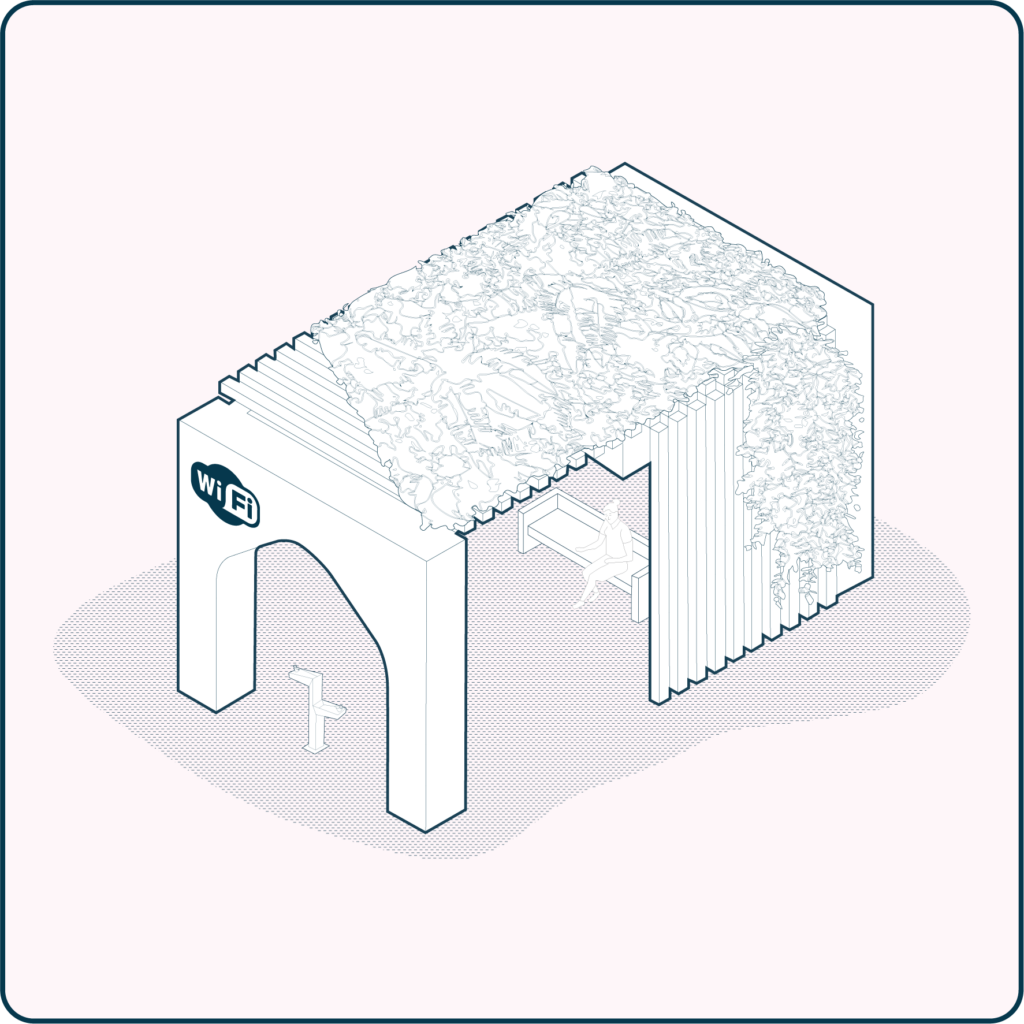
The environment refers to the interconnected physical, social, cultural, economic and digital conditions within which individuals live and interact, particularly as shaped by the built environment. From an inclusive perspective, it is understood as a relational system that can either enable or restrict participation depending on its accessibility, adaptability and socio-spatial design. In the context of the climate crisis, inclusive environmental planning is essential to ensure that adaptation measures (such as flood resilience, thermal comfort strategies and accessible emergency infrastructure) and mitigation strategies (including energy efficiency, low-carbon materials and sustainable mobility) do not create new inequalities. Instead, climate-responsive architecture and urban development must integrate accessibility, affordability and usability for diverse populations, ensuring that the transition towards resilient and low-carbon environments is socially equitable and universally inclusive.
Gender Perspective
A gender perspective is an analytical and normative framework that examines how socially constructed roles, expectations, power relations and institutional structures related to gender influence access to rights, resources, opportunities and spatial experiences. Within inclusive practice, it extends beyond a binary understanding of sex and explicitly recognises the diversity of gender identities and sexual orientations, including LGBTQI+ communities, whose experiences may be shaped by discrimination, invisibility or spatial insecurity. Applying a gender perspective involves identifying structural inequalities, gender-based violence, care burdens, economic disparities and unequal representation in decision-making processes, as well as considering how the design of housing, public space, mobility systems and services may differently affect women, men and gender-diverse persons. It also intersects with other social categories—such as age, ethnicity, disability and socio-economic status—requiring an intersectional approach to ensure that policies and built environments promote safety, dignity, equal participation and substantive equality for all gender identities.
Hearing Impairment
A partial or total reduction in the ability to perceive sound, ranging from mild hearing loss to profound deafness. From an inclusion standpoint, accessible communication systems—such as captioning, visual alerts, sign language interpretation and assistive listening technologies—are necessary to ensure equal participation for people living with hearing impairment.
Low-Education
Low education refers to a socio-educational condition characterised by limited formal schooling or restricted access to recognised educational qualifications. From an inclusion perspective, disparities in educational attainment may affect individuals’ ability to access, interpret and exercise their rights, particularly where institutional language, technical regulations and policy frameworks are complex. Inclusive strategies therefore require not only the use of plain language and accessible communication formats, but also active translation and bridging of rules, standards and legal rights into understandable and actionable information for groups with lower levels of formal education. By making regulatory frameworks—especially those concerning housing, accessibility and the built environment—comprehensible and transparent, public institutions and professionals contribute to strengthening civic agency, enabling individuals and communities to understand, claim and defend their rights. In this way, improving accessibility of knowledge becomes a mechanism for social empowerment and for advancing a more just and equitable built environment.

Low-Income
Low income refers to a socio-economic condition in which individuals or households possess financial resources significantly below prevailing societal standards, limiting their access to housing, services, mobility, digital infrastructure and other essential opportunities. From an inclusion perspective, income inequality is a structural determinant of spatial exclusion within the built environment. Urban planning and architectural practice must therefore actively prevent patterns of socio-spatial segregation and rigid zoning that concentrate disadvantage or privilege in separate areas. Avoiding processes such as elitisation, gentrification-driven displacement or the formation of marginalised enclaves and ghettos is essential to promoting social cohesion. Instead, inclusive built environments should foster mixed-use development, affordable housing provision and socio-economic diversity, enabling coexistence, interaction and equitable access to public space and urban resources. In this way, spatial design becomes a key instrument in counteracting inequality and supporting inclusive, resilient communities.

Older People
Older people are individuals in later stages of adulthood who may experience age-related changes in physical, sensory or cognitive functioning, while remaining highly diverse in capacities, lifestyles and social roles. From an inclusion perspective, this category is particularly relevant and necessary in contemporary Western societies, which are characterised by significant demographic ageing and increasing life expectancy. As population structures shift towards a higher proportion of older adults, inclusive design and public policy must respond proactively by ensuring accessible housing, transport, healthcare, digital services and public spaces that support autonomy, participation and social connectedness. Addressing the needs of older people is therefore not solely a matter of vulnerability, but a structural societal priority linked to demographic sustainability, intergenerational equity and the long-term resilience of social systems.
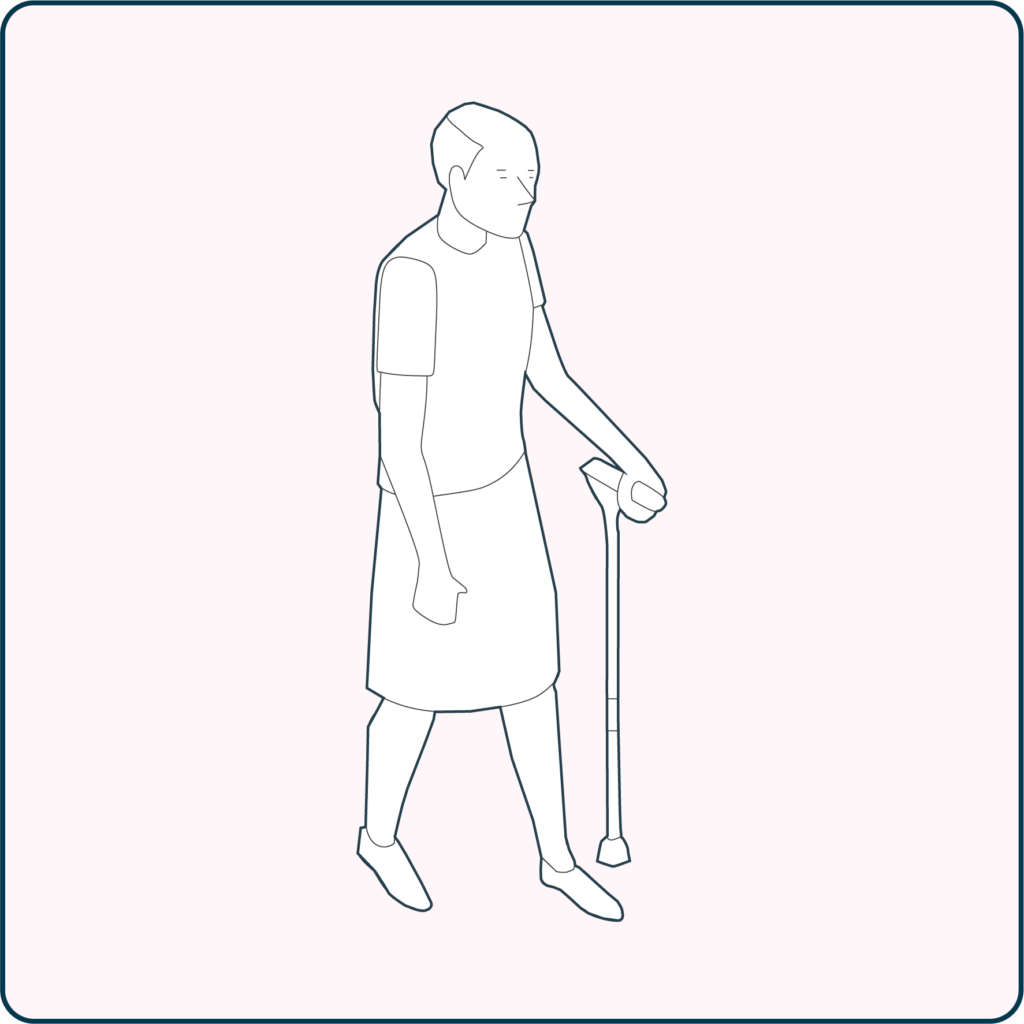
Physical Abilities and Features
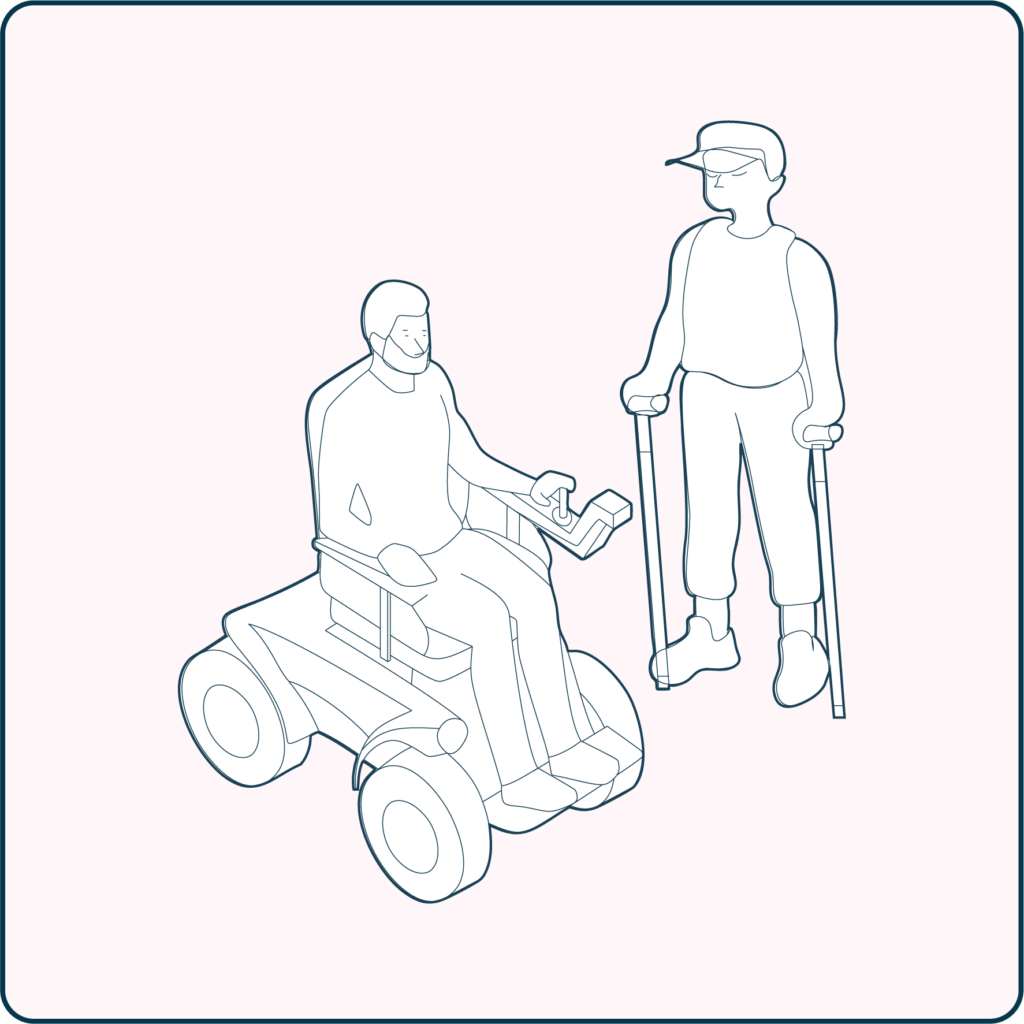
Characteristics relating to mobility, strength, coordination, dexterity, endurance and bodily structure. Variations may result from disability, health conditions, ageing or natural human diversity. Inclusive design principles address these variations through barrier-free architecture, ergonomic design and adaptable systems that support independent use.
Visual Impairment
A partial or complete limitation in visual perception that cannot be fully corrected through standard lenses or medical treatment. This includes low vision and blindness. Inclusive measures include high-contrast design, tactile guidance systems, audible information and navigation systems, screen-reader compatibility and alternative sensory formats.