
Inclusive Care Centres
Spaces dedicated to low-income people must respond to very specific needs that go beyond mere shelter. To guarantee a positive impact on their quality of life and foster their social integration, these environments must be designed based on criteria of dignity, comprehensive accessibility and autonomy.
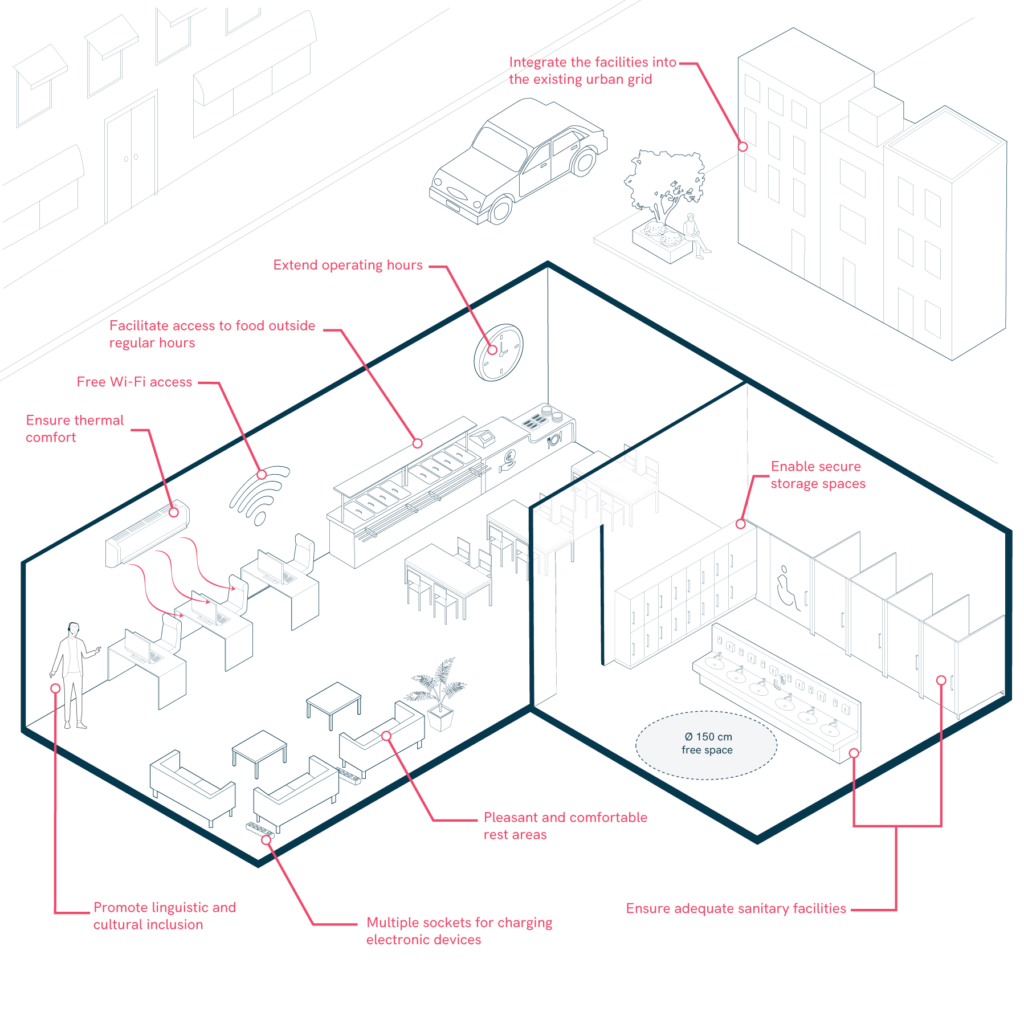
- Extend operating hours beyond regular shifts to cover basic needs during weekends, bank holidays and holiday periods.
- Ensure adequate sanitary facilities, with a sufficient number of toilets and showers to allow for the daily hygiene of all users.
- Provide secure storage spaces, such as lockers, so that people can store their clothes, personal belongings and work tools.
- Provide connectivity and power, ensuring access to a free Wi-Fi network and providing multiple sockets for charging electronic devices.
- Ensure thermal comfort through proper climate control, offering a safe refuge from extreme temperatures in both winter and summer.
- Provide out-of-hours food support, maximising catering and food bank services so that users can take surplus food home.
- Integrate the centres into the established urban fabric, avoiding their isolation in industrial estates or hard-to-reach outskirts.
- Promote linguistic and cultural inclusion, offering local language courses and having multilingual staff to assist migrants.